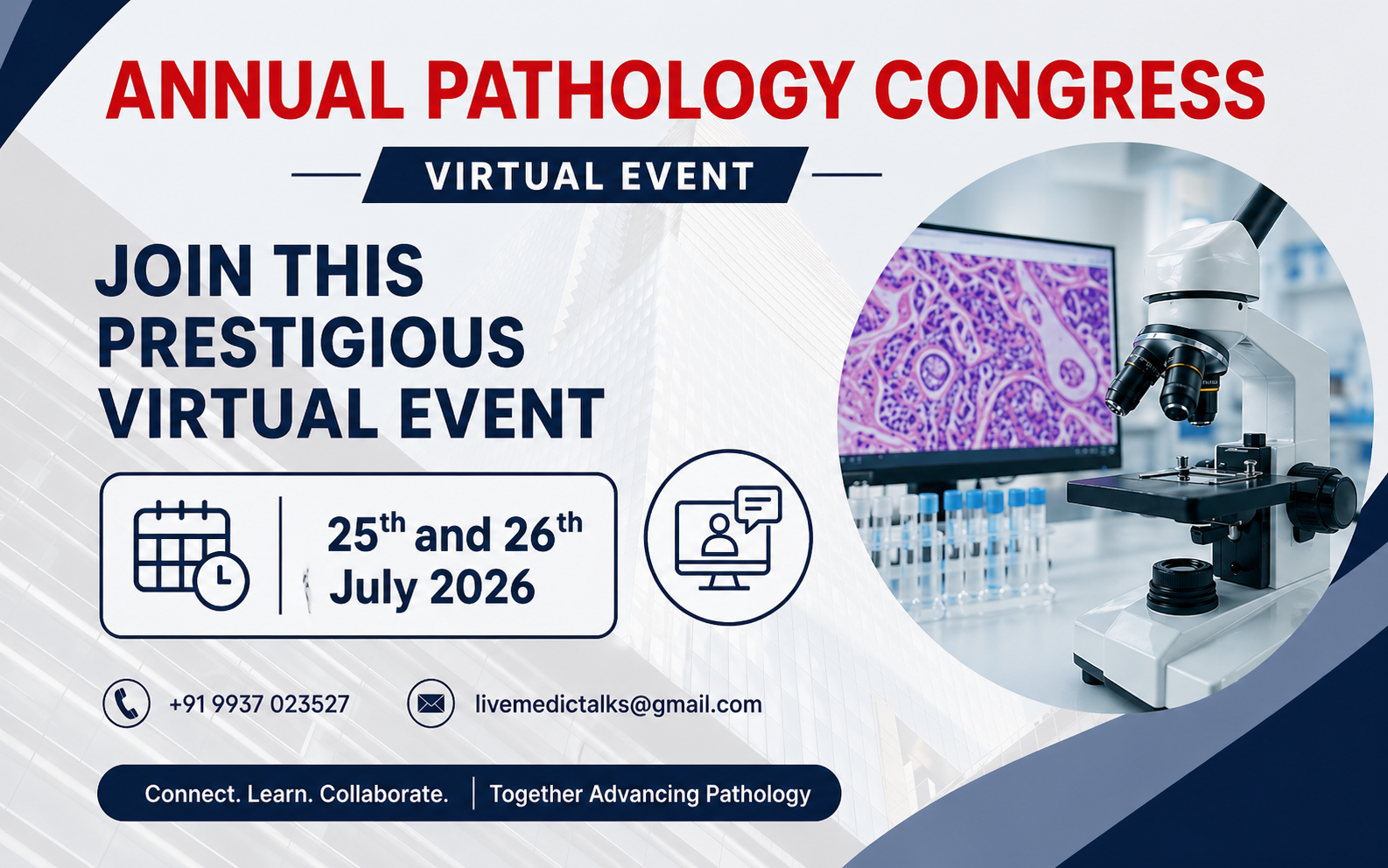
Annual Pathology Congress
About the Webinar
We invite all the participants across the world to attend the Annual Pathology Congress during July 25-26, 2026. The theme of the conference is “Enlightening the Latest Advancements in Pathology” and to encourage young minds and their research abilities by providing an opportunity to meet the experts in the field of Pathology. Pathology Congress-2026
Pathology Congress-2026 anticipates
hundreds of delegates including international keynote lectures and oral
presentations by renowned speakers and poster presentations by students,
Exhibitions and delegates all around the world which will craft a platform for
global promotion and effective development in this field. It provides
international networking and opportunities for collaborations with worldwide
companies and industries Pathology Meetings.
Who Should attend?
- Pathologists
- Microbiologists
- Oncologists
- Pharmacists
- Neurologists
- Immunologist
- Pediatricians
- Botanical Pathologists
- Cardiologists
- Gynecologists
- Therapists
- Vaccine Developers
- Dermatologists
- Epidemiologists
- Gastroenterologists
- Ophthalmologists
- Veterinary pathologists
TARGET AUDIENCE
Pathology Congress-2026 is expecting the participants from all over the world in various fields of pathology. This combination of audience will give an ideal blend to justify our theme “Enlightening the Latest Advancements in Pathology” Pathology Meetings welcomes all the experts in this field to explore their research and views towards the theme of this congress.
- Pathologists
- Professors, Researchers, Students and Technical Staff from the field of pathology
- Delegates from various industries
- Directors/Co-Directors of Research based companies across Europe and US who are investing in Pathology
- Healthcare Professionals
SESSIONS AND TRACKS
Track 01: Pathology
Pathology is an important area of modern medical diagnosis and medical research. It is primarily concerned with the causative study of disease, whether it is caused by pathogens or a non-infectious physiological problem. The word pathology is derived from the Ancient Greek word’s pathos, which means "suffering," and -logy, which means "study of." Understanding how tissues and cells are harmed, how the body responds to the damage, and how the body heals itself is the goal of this extensive and in-depth scientific field. Investigations include cellular responses to injury, necrosis, inflammation, wound healing, and neoplasia.
Track 02: Dermatopathology
Dermatopathology is a specialized branch of pathology that focuses on the microscopic examination of skin tissue to diagnose various dermatological conditions. Dermatopathologists, experts in this field, analyze skin biopsies and specimens to identify skin disorders, including skin cancers, inflammatory diseases, and infections. This precise diagnostic approach aids in formulating effective treatment plans, enabling timely intervention and improved patient outcomes. Dermatopathology is especially crucial in the early detection of skin cancers like melanoma and helps guide dermatologists and oncologists in providing tailored care. This field continues to advance with technological innovations, contributing significantly to our understanding and management of skin-related diseases.
Track 03: Veterinary Pathology
Veterinary Pathology is the review and analysis of creature ailment by utilizing creature tissue and liquids. It is arranged into two primary trains; those are veterinary anatomical pathology and veterinary clinical pathology. Anatomical veterinary pathologists analyze maladies in view of examination of organs, tissues, and bodies. Clinical veterinary pathologists analyze sicknesses in view of research center investigation of natural liquids, Conferences on Pathology (for example, pee or blood). The examination of a biopsy or Pediatric pathology conferences extraction by a veterinary pathologist can help with diagnosing a sickness or help in giving a decent treatment. Veterinary pathology conferences give a basic connection between the fundamental and clinical sciences.
Track 04: Surgical Pathology
Surgical Pathology is a specialized branch of pathology dedicated to the examination and diagnosis of tissues and organs removed during surgical procedures. Highly skilled pathologists analyze these specimens to identify diseases, tumors, infections, and structural abnormalities. The information they provide is crucial for treatment planning, as it helps surgeons and medical teams make informed decisions about patient care. Surgical pathology is essential in ensuring the accuracy and precision of surgical interventions, whether it's a routine biopsy or a complex surgical procedure. It plays a vital role in enhancing patient outcomes, advancing medical research, and contributing to the overall understanding of various diseases and their treatment strategies.
Track 05: Anatomical & Forensic Pathology
Anatomic pathology is a clinical specialty that handles disease diagnosis based on examination of organs and tissues that are naturally observable, minute, biochemical, immunologic, and subatomic. It has a relationship to handling, evaluating, and locating careful instances. Scientific pathologists are responsible for determining the cause (a conclusive and quick explanations behind the ending of life) and manner of death (manslaughter, self-destruction, coincidental, obscure), whereas criminological pathologists focus on determining the cause of death by inspecting a body.
Track 06: Comparative Pathology
Comparative Pathology is a specialized field of study that involves the examination and comparison of diseases and pathologic conditions across different species, particularly humans and animals. Expert comparative pathologists investigate similarities and differences in the presentation, progression, and underlying mechanisms of diseases. This field is essential for understanding zoonotic diseases, which can transmit between animals and humans. Comparative pathology contributes to veterinary medicine, wildlife conservation, and public health by providing insights into disease management, transmission, and prevention. Additionally, it plays a crucial role in advancing our knowledge of disease pathogenesis, which can lead to improved treatments and strategies for both human and animal health.
Track 07: Head & Neck Pathology
Head and Neck Pathology is a specialized field within pathology that focuses on the diagnosis and study of diseases affecting the head, neck, and related structures. Expert pathologists in this discipline examine tissue samples obtained through biopsies or surgical procedures to identify a wide range of conditions, including head and neck cancers, salivary gland disorders, thyroid diseases, and oral cavity lesions. Accurate diagnosis is essential for guiding treatment decisions, including surgery, radiation therapy, or chemotherapy. Head and Neck Pathology also plays a crucial role in advancing medical research, contributing to a deeper understanding of diseases in this region and improving patient care and outcomes.
Track 08: Psychopathology
Psychopathology is a specialized field within psychology and psychiatry that focuses on the study of mental disorders and abnormal behaviours. Psychopathologists explore the causes, symptoms, and treatment of various psychological conditions, including depression, anxiety disorders, schizophrenia, and personality disorders. Through rigorous research and clinical observation, they aim to understand the underlying factors contributing to mental illness. Psychopathology plays a crucial role in improving the diagnosis and treatment of individuals with psychological disorders, ultimately enhancing mental health care. It also contributes to reducing the stigma surrounding mental illness and promoting awareness and empathy, fostering a more compassionate and informed society.
Track 09: Hematopathology
Hematopathology is a specialized field of pathology that focuses on the study and diagnosis of diseases related to blood and bone marrow. Hematopathologists examine blood, bone marrow, and lymph node samples to identify and classify disorders such as leukemia, lymphoma, and various blood clotting disorders. These precise diagnoses are critical for tailoring effective treatment strategies, monitoring disease progression, and predicting patient outcomes. Hematopathology also contributes to medical research, advancing our understanding of blood-related conditions and facilitating the development of innovative therapies. With the constant evolution of diagnostic techniques and therapies, hematopathology plays a pivotal role in improving the lives of individuals affected by hematological disorders.
Track 10: Surgical Pathology
Surgical Pathology is a specialized branch of pathology dedicated to the examination and diagnosis of tissues and organs removed during surgical procedures. Highly skilled pathologists analyze these specimens to identify diseases, tumors, infections, and structural abnormalities. The information they provide is crucial for treatment planning, as it helps surgeons and medical teams make informed decisions about patient care. Surgical pathology is essential in ensuring the accuracy and precision of surgical interventions, whether it's a routine biopsy or a complex surgical procedure. It plays a vital role in enhancing patient outcomes, advancing medical research, and contributing to the overall understanding of various diseases and their treatment strategies.
Track 11: Histopathology
Histopathology is a vital branch of pathology that involves the microscopic examination of tissue samples to diagnose and understand diseases. Skilled histopathologists analyze thin sections of tissues, obtained through biopsies or surgical procedures, to identify cellular abnormalities, inflammation, infections, and cancerous growths. By meticulously studying tissue structures and cell characteristics, histopathology provides critical insights into the nature, severity, and progression of various diseases. These precise diagnoses guide treatment decisions and patient care. Additionally, histopathology is essential for advancing medical research, as it deepens our knowledge of disease mechanisms and aids in the development of targeted therapies, ultimately improving healthcare outcomes.
Track 12: Gastrointestinal and Liver Pathology
Gastrointestinal and Liver Pathology is a specialized field within pathology that focuses on the diagnosis and study of diseases affecting the digestive tract, liver, and related organs. Expert pathologists in this discipline examine tissue samples obtained through procedures like endoscopies, biopsies, and surgical resections to identify a wide range of conditions, including gastrointestinal cancers, inflammatory bowel diseases, hepatitis, and cirrhosis. Accurate diagnosis is crucial for effective treatment planning and patient care. Moreover, this field plays a vital role in medical research, providing insights into the complexities of gastrointestinal and liver disorders and contributing to the development of innovative therapies to improve patient outcomes and overall digestive health.
Track 13: Clinical Pathology
Clinical Pathology is a vital branch of medical diagnostics that focuses on the analysis of bodily fluids, tissues, and cells to diagnose and monitor diseases. It encompasses a wide range of laboratory tests and techniques, including blood tests, urine analysis, and tissue biopsies. Clinical pathologists play a crucial role in identifying abnormalities, measuring the effectiveness of treatments, and assessing overall patient health. Their findings guide physicians in making informed decisions about patient care. With the integration of advanced technologies and automation, clinical pathology has become faster and more precise, enhancing the accuracy of diagnoses and enabling early detection of various medical conditions, ultimately improving patient outcomes.
Track 14: Pathological Case Reports
An itemised description of the side effects, signs, conclusion, therapy, and follow-up of a single patient might be included in a case report. Case reports may provide a segment profile of the patient, but they typically show an exceptional or unusual pervasiveness. Some case reports may include a writing analysis of numerous related cases. Case studies play an important role in clinical education as well, providing a framework for case-based learning.
Track 15: Breast Pathology
The analysis of breast-related neurotic disorders is handled by breast pathology. In-depth mastitis, which is common during lactation, and fat corruption, which is frequently related to injury or prior medical treatment, are both discussed in the review. The majority of breast cancers are organised as carcinomas and develop from epithelial cells. There are numerous types of breast tumours, and it is essential to correctly identify each one in order to select the best course of action.
Track 16: Cancer Cytopathology
The study of cytopathology controls how diseases manifest at the cellular level. Both "cyto" and "pathology" allude to an infection. In order to examine individual cells or small groups of cells and determine if they are normal or show signs of sickness, the tests are typically performed on cells in liquid desires, scrapings, or brushings. Cytopathology plays a big role in the diagnosis of many different diseases. a cancerous development In contrast to histology, which emphasises on complete tissues, cytopathology focuses on the examination of free cells or tissue fragments.
Track 17: Renal Pathology
Renal pathology is a specialized branch of pathology dedicated to the study of kidney diseases. Renal pathologists examine kidney tissue samples obtained through biopsies or surgical procedures to diagnose a wide range of renal conditions, including glomerulonephritis, kidney infections, kidney stones, and various forms of kidney cancer. Accurate diagnosis is critical for treatment planning and management of these conditions, as kidney health is essential for overall well-being. Renal pathology also plays a crucial role in advancing our understanding of kidney diseases, contributing to research efforts and the development of targeted therapies. This field is instrumental in improving patient outcomes and enhancing our knowledge of renal health.
Track 18: Chemical Pathology
Chemical Pathology, also known as Clinical Biochemistry, is a specialized branch of pathology that focuses on the analysis of bodily fluids like blood and urine to diagnose and monitor various medical conditions. Chemical pathologists employ biochemical and molecular techniques to measure specific molecules, such as enzymes, hormones, and metabolites, in these fluids. These measurements provide valuable insights into a patient's overall health, including organ function, nutritional status, and the presence of diseases like diabetes, kidney disorders, and metabolic diseases. By interpreting these laboratory results, chemical pathologists play a crucial role in patient care, treatment planning, and disease management, contributing to improved healthcare outcomes.
Track 19: Neuropathology
Neuropathology is a specialized branch of pathology focused on the examination and diagnosis of diseases related to the nervous system, including the brain, spinal cord, and peripheral nerves. Skilled neuropathologists analyze tissue samples obtained through biopsies or autopsies to identify and characterize a wide spectrum of neurological conditions, such as brain tumors, neurodegenerative diseases (e.g., Alzheimer's, Parkinson's), and infections of the nervous system. Precise diagnosis is critical for treatment planning and understanding the underlying causes of neurological disorders. Neuropathology also plays a crucial role in advancing neuroscience research, shedding light on the intricacies of the nervous system and contributing to the development of treatments for neurological diseases.
Track 20: Pulmonary Pathology
Pulmonary pathology is a specialized branch of pathology that delves into the examination and diagnosis of diseases affecting the lungs and respiratory system. Skilled pulmonary pathologists analyze tissue samples obtained through procedures like biopsies, bronchoscopies, and autopsies to identify a wide range of pulmonary conditions, including lung cancer, infections, interstitial lung diseases, and pulmonary fibrosis. Accurate diagnosis is vital for determining the appropriate treatment and management strategies for patients. Additionally, pulmonary pathology contributes to on-going research efforts, shedding light on the intricate mechanisms of lung diseases and paving the way for innovative therapies. It plays a pivotal role in enhancing respiratory health and patient care.
Track 21: Speech & language pathology
Speech Pathology is the investigation of human correspondence issue including scatters of discourse, dialect and gulping. Discourse issue happens when a man experiences issues creating discourse sounds effectively or fluidly (e.g., stammering is a type of disfluency) or has issues with his or her voice or reverberation. Dialect issue happens Conferences on Pathology when a man experiences difficulty understanding others (open dialect), or sharing musings, thoughts, and emotions (expressive dialect). Discourse Language pathologists’ asses and treat a wide scope of discourse, dialect, gulping, voice, and subjective correspondence disabilities. Conferences on Pathology
MARKET ANALYSIS
The clinical field of pathology provides patients and practitioners with information about symptoms. It affects almost every aspect of patient care, from identifying cancerous development to managing on-going disorders through precise lab testing. We are hosting the Annual Pathology Congress from July 25-26, 2026 with the participation of professional researchers and scientists engaged in the promotion of high-quality education & research in all aspects.

The size of the global digital pathology market, estimated at USD 926.9 million in 2021, is anticipated to increase at a compound annual growth rate (CAGR) of 7.5% from 2022 to 2030. The market has been primarily driven by an increased emphasis on enhancing workflow effectiveness and a demand for quicker diagnostic tools for chronic diseases like cancer. The clinical need to adopt digital pathology is expected to increase due to the increased frequency of chronic illnesses. This will help to improve the patient diagnostic imaging measures already in place and lower the high cost of conventional diagnostics. The demand for technologically sophisticated diagnostic techniques is also anticipated to increase due to the growing elderly population, which is sensitive to chronic illnesses.
Anatomic pathology is a medical specialty dealing with the diagnosis of a disease based on organ and tissue, microscopic, biochemical, microscopic, immunological, and molecular analysis. The anatomic pathology market can be divided on the basis of segments like product and service, application, and end-use.

The industry can be broadly categorised based on product and service into:
- Instruments
- Microtomes and Cryostat
- Tissue Processor
- Automatic Stainers
- Other Products
- Consumables
- Reagents and Antibodies
- Probes and Kits
- Others
- Services
The anatomic pathology market can be divided on the basis of application as:
- Disease Diagnosis
- Drug Discovery and Development
- Others
The anatomic pathology market can be categorised based on end-use as:
- Research Laboratories
- Hospitals
- Diagnostic Laboratories
- Others
PARTICIPATION OPTIONS AND BENEFITS:
Virtual Registration – Pathology Congress 2026
Experience Pathology Congress 2026 from anywhere in the world with our flexible virtual participation option. This category is designed for attendees who wish to engage with the conference remotely while still benefiting from its rich scientific content.
What You Get:
- Access to live-streamed keynote sessions, scientific presentations, and panel discussions
- On-demand access to recorded sessions for later viewing
- Opportunity to participate in live Q&A sessions and interactive discussions
- Virtual networking opportunities with global experts, researchers, and peers
- Digital conference materials, including abstracts and program schedule
Why Choose Virtual Attendance:
- Attend from the comfort of your home or workplace
- Stay updated on the latest advancements in pathology
- Engage with an international community without travel constraints
- Flexible access to sessions across different time zones
Join Pathology Congress 2026 virtually and be part of a global exchange of knowledge and innovation in the field of pathology.